
How We Solved Sweat Marks on Suede Shoes (Footwear Case Study)
The Problem
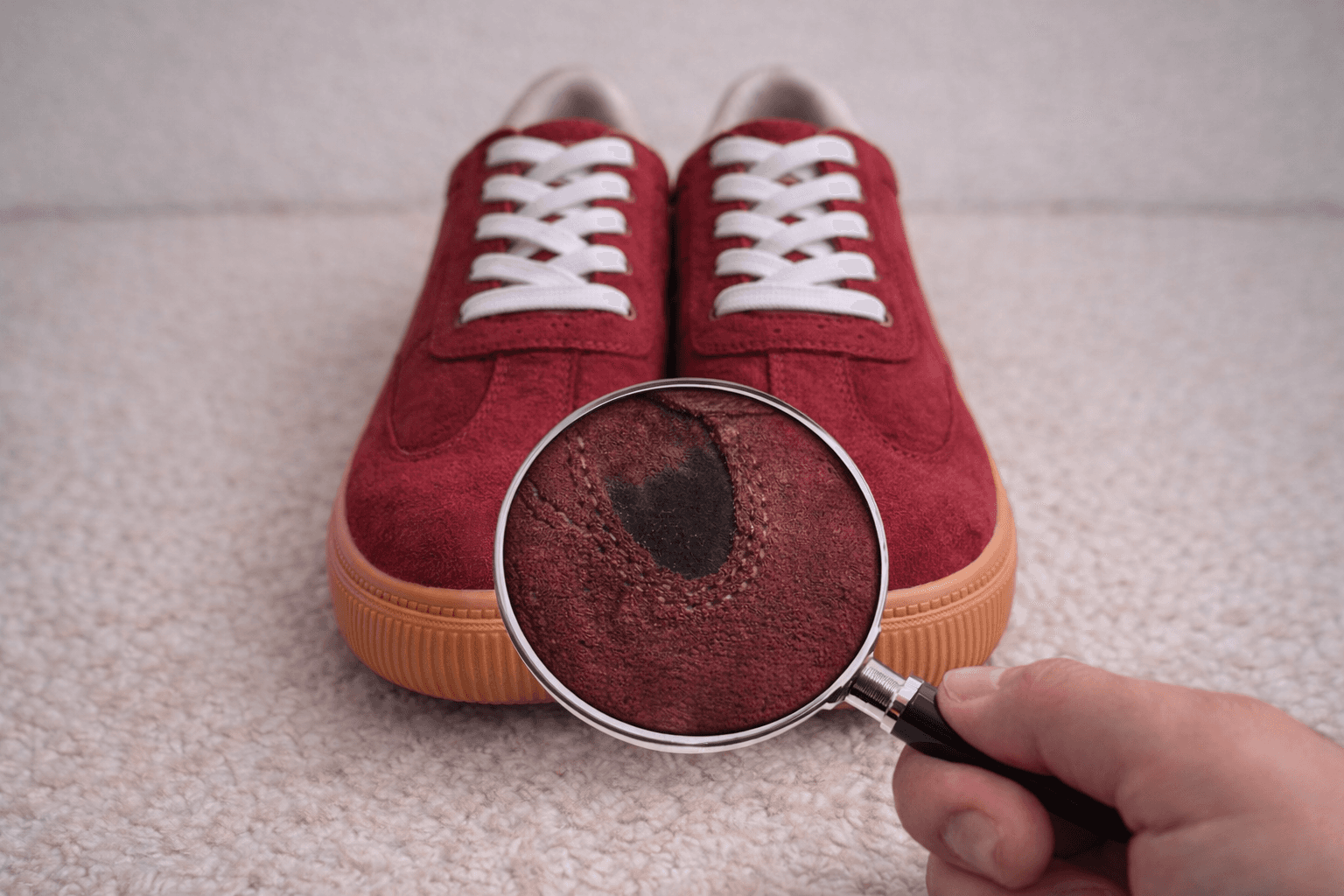
A footwear brand approached us after receiving customer complaints about visible dark marks appearing on suede shoes after wear.
At first glance, these marks were assumed to be:
Glue leakage
Material defects
Production issues
But none of these explanations held up under deeper analysis.
This created uncertainty:
Was it a factory issue?
A material issue?
Or something happening after the product reached customers?
Our Investigation
We conducted a full technical evaluation across:
Production process
Material behavior
Construction method
Real-world usage conditions
What We Ruled Out
Based on testing and factory validation:
Glue migration was unlikely due to controlled production processes
Heat during manufacturing did not cause adhesive issues
Suede material does not naturally release oils under normal conditions
These common assumptions were not the root cause.
The Real Cause
The issue was identified as: Sweat Penetration from Inside the Shoe
The marking pattern showed moisture coming from inside, not outside.
This means:
The problem was not the material itself
It was how the product handled moisture during wear
Why It Happened in This Product
This issue was linked to design and construction decisions, not manufacturing defects.
Two key factors:
1. Non-Breathable Outsole
The rubber outsole created a sealed environment
Moisture had no way to escape
2. Direct-Attach Construction
Sweat was absorbed into the upper material
No ventilation pathway to release moisture
Result: Moisture buildup causing visible marks on suede
Immediate Solution (Short-Term Fix)
For existing production, we implemented:
Water-Repellent Coating
Applied to finished uppers
Reduced external moisture impact
Helped minimize visible marks during early wear
Important:
This is a temporary solution
It does not solve internal moisture issues
Long-Term Solution (System Fix)
We developed a structured testing and improvement plan:
1. Cushioning & Moisture Management Testing
Improve internal absorption and comfort
2. Waterproof Material Trials
Test alternative suede and fabric options
3. Lab-Based Sweat Simulation
Controlled testing with synthetic sweat
Measure staining and penetration
4. Construction Method Comparison
Evaluate alternative lasting methods
Reduce moisture transfer to upper
Key Takeaway
This problem was not caused by:
Poor manufacturing
Bad materials
It was caused by: A mismatch between design, construction, and real-world use
What This Means for Brands
Most brands assume product issues come from factories.
In reality:
Many problems come from design decisions
Or how materials behave under real usage conditions
If not identified early, this leads to returns, complaints, and brand damage
Final Thoughts
Whenever you build a shoe, you're also building a system that needs to work in real life.
If any part of that system is misunderstood, problems will show up after production.
If you're facing product issues or want to avoid costly mistakes in development, get in touch below to start your project.